
 |
|
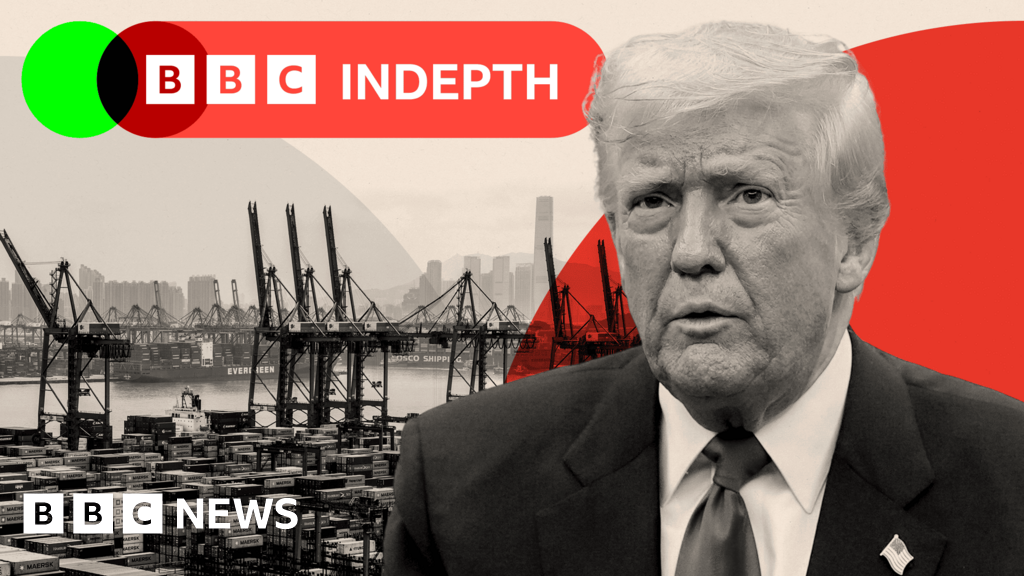
Faisal Islam's analysis of Donald Trump's recent actions regarding tariffs on China paints a picture of a situation far from resolved, despite appearances of a rollback. While Trump and his administration have attempted to portray the past week as a strategic victory, a 4D chess move that has put China in check, the reality, according to Islam, is that the United States has erected a significant protectionist tariff wall, reminiscent of the 1930s. This wall imposes a universal 10% tariff, regardless of whether a country has a trade deficit with the US. This blanket approach treats nations like the UK, which may not have a trade deficit with the US, the same as the EU, which does. The implications are far-reaching, extending beyond the immediate economic consequences to the realm of geopolitical strategy and international relations. The article highlights the precariousness of the situation and questions what the future holds, particularly concerning potential tariffs on medicines, a major UK export. Moreover, the piece identifies a logistical challenge related to a multi-million dollar port tax on cargo vessels docking in the US that were "made in China." This tax, set to take effect the following Friday, would impact a significant portion of the global merchant fleet, creating logistical chaos. Even with a 90-day pause on higher tariffs, the uncertainty surrounding these policies remains too great for companies to undertake the complex process of rerouting global trade. The heart of the issue lies in the escalating tensions between the world's two largest economies. The high tariffs are disrupting business between these nations, which collectively account for approximately 30% of global trade. This disruption has the potential to severely impact the global economy, potentially leading to factory closures in China and the need for a substantial stimulus package from Beijing to mitigate the economic damage. The US, on the other hand, is likely to experience a surge in consumer prices. The author suggests that while the President may attempt to prevent companies from raising prices, the effects of the tariffs will eventually be felt by consumers. In contrast, countries like Canada and those in Europe may experience price cuts due to the availability of cheaper goods from sources other than China. The article delves deeper into the potential for trade wars to evolve into currency wars. The recent turmoil in credit markets, particularly in the US bond market, is a manifestation of this threat. The Trump administration's concern about the bond market, as evidenced by the President's remarks about the "yippy" bond market, reveals a key pressure point. The rise in interest rates on US government bonds in overnight trading in Asia, reminiscent of the "Dash for Cash" during the early stages of the pandemic, is a sign of financial fragility. While it is unlikely that the Chinese government was directly responsible for the bond sales, the incident highlighted a vulnerability for Trump. China's position as the second-largest holder of US government debt gives it the potential to inflict significant economic damage on the US by dumping its holdings. However, such a move would be mutually destructive. The article notes that the bond market's scepticism reflects a broader concern about Trump's tariff policy. While the Federal Reserve has the power to stabilize bond markets, it is unclear whether Chairman Jerome Powell will intervene. The bond market's concerns are echoed by Treasury Secretary Scott Bessent, who is advocating for trade deals with US allies to counter China. The author points out that the US's previous treatment of these allies as "cheaters, looters, and pillagers" makes this shift in strategy questionable. The US needs the support of the EU, the UK, and the rest of the G7 to effectively confront China. China, on the other hand, needs these countries to remain neutral and continue importing its exports. The author concludes that Trump's handling of the situation has weakened the US's position, as neither friend nor foe is likely to negotiate with America under the current circumstances. While there is a temporary calm, it is likely to be short-lived. It is also interesting to consider that the initial intention of the trade war was to bring jobs back to America, however with tariffs and other changes affecting both the US and Chinese Markets, there is potential for many American companies to simply find new suppliers in other countries, leaving the American consumer with an increased expense. In this case, the trade war could have the reverse affect of the one intended, leaving the American worker jobless and the American consumer broke. In the end, the long-term consequences of this trade war remain uncertain, but it is clear that the global economy is facing a period of significant turbulence. The potential for currency wars, economic recession, and geopolitical instability is real, and the actions of the US and China in the coming months will be crucial in determining the future of the global economy. The current situation is not sustainable in the long run, and both sides will need to find a way to de-escalate tensions and work towards a more cooperative relationship. Failure to do so could have catastrophic consequences for the world economy.
The economic impact of the US-China trade war extends beyond the immediate effects of tariffs. It introduces a level of uncertainty that undermines investment decisions and disrupts global supply chains. Businesses are hesitant to commit to long-term investments when the rules of trade are constantly changing. This uncertainty can lead to a slowdown in economic growth and a decline in productivity. Furthermore, the trade war has the potential to exacerbate existing economic inequalities. Consumers, particularly those with lower incomes, are more likely to be affected by rising prices. Businesses that rely on imported goods may be forced to cut wages or lay off workers. The trade war can also create opportunities for some businesses and countries. Companies that are able to find alternative sources of supply or that operate in sectors that are not directly affected by the tariffs may benefit from the disruptions. Countries that are able to negotiate trade deals with the US or China may also gain a competitive advantage. However, the overall impact of the trade war is likely to be negative for the global economy. The escalation of trade tensions between the US and China is a major risk to the world economy, as it could lead to a significant slowdown in global trade, investment, and growth. The trade war could also have significant geopolitical consequences, as it could lead to a realignment of global alliances and a shift in the balance of power. The global trade and manufacturing of medications is an essential supply chain for the safety and well being of all humans. Placing a high tariff or a tax on products that are meant to aid and assist in prolonging life can lead to the destruction of the quality of life for the citizens of both countries involved. These products need to be available at an affordable price for all citizens, and should be given the highest considerations when talking about taxes, tariffs, or import and export rules. These types of products are more essential than common consumer goods and should be treated as such. As the tensions between the United States and China continue, it is important to consider the potential implications for the global economy and for the health and well-being of citizens around the world.
The interplay between trade wars and currency valuations introduces another layer of complexity. When countries impose tariffs, it increases the cost of imported goods, which can lead to inflation. Central banks may then respond by raising interest rates to control inflation. Higher interest rates can strengthen a country's currency, making its exports more expensive and imports cheaper. This can offset the effect of the tariffs and make it harder for domestic businesses to compete. Currency manipulation can also be used as a weapon in a trade war. A country can deliberately devalue its currency to make its exports cheaper and imports more expensive. This can give its businesses a competitive advantage and help to offset the impact of tariffs. However, currency manipulation can also lead to instability in the global financial system. Investors may lose confidence in a country's currency, leading to capital flight and a currency crisis. The bond market's reaction to trade war developments provides valuable insights into investor sentiment. When investors become concerned about the economic outlook, they tend to buy government bonds, which are considered to be a safe haven. This drives up bond prices and lowers interest rates. A decline in interest rates can signal a weakening economy and can prompt central banks to take action to stimulate growth. The Federal Reserve's response to the trade war is crucial. The Fed has a dual mandate to maintain price stability and to promote full employment. It must weigh the risks of inflation and economic slowdown when deciding whether to raise or lower interest rates. The Fed's decisions can have a significant impact on the global economy. If the Fed raises interest rates too quickly, it could trigger a recession. If it keeps interest rates too low for too long, it could lead to inflation. The geopolitical implications of the trade war are also significant. The trade war has strained relations between the US and China and has raised concerns about the future of the global trading system. The trade war could also lead to a realignment of global alliances, as countries may seek to diversify their trading relationships and reduce their dependence on the US and China. It is important for policymakers to carefully consider the potential consequences of their actions and to work together to find a resolution to the trade war that is in the best interests of the global economy. The outcome of the trade war will have a lasting impact on the world economy and on the lives of people around the world.
The article also touched upon the potential for China to dump its US government debt holdings as retaliation. This scenario, while considered a form of mutually assured economic destruction, highlights a critical vulnerability for the United States. The sheer magnitude of China's holdings could trigger a significant financial crisis if suddenly unloaded. While this is an unlikely move, given the self-inflicted harm it would cause to China's own economy, it serves as a stark reminder of the interconnectedness of the global financial system and the potential for economic leverage to be used as a tool of geopolitical pressure. It also underscored the bond market's underlying skepticism regarding Trump's tariff policies, suggesting a lack of confidence in the long-term viability and effectiveness of these measures. This skepticism is not confined to financial markets alone. The author points to Treasury Secretary Scott Bessent's advocacy for trade deals with US allies as further evidence of a growing recognition within the Trump administration that a united front is necessary to effectively counter China's economic influence. However, the article also highlights the challenges in forging such a united front, given the US's past treatment of its allies. The US's need for allies to confront China is further accentuated by the current state of affairs where neither allies nor adversaries trust the US's negotiating position, having witnessed the inconsistencies and perceived irrationality in the US's approach. The author concludes by noting that while there is a temporary calm in the trade war, it is likely to be short-lived. The underlying tensions and unresolved issues remain, suggesting that further escalations and disruptions are possible. The article ultimately paints a picture of a global economy facing significant uncertainty and risks, with the US-China trade war serving as a major source of instability. It underscores the need for a more nuanced and collaborative approach to international trade relations, one that recognizes the interconnectedness of the global economy and the potential for unintended consequences from unilateral actions.
In summary, the article underscores the complex and multifaceted nature of the US-China trade war and its potential implications for the global economy. While there may be short-term lulls and perceived victories, the underlying tensions and uncertainties remain, posing significant risks to global trade, investment, and economic stability. The article further highlights the need for a more nuanced and collaborative approach to international trade relations, emphasizing the importance of strategic alliances and consistent policies. The potential for unintended consequences from unilateral actions is a recurring theme, underscoring the need for careful consideration of the broader economic and geopolitical implications of trade policies.
Considering the long term ramifications, it is essential to remember the core goal of a free and open market. Tariffs and trade wars of this nature tend to make all parties involved suffer. In order to establish a healthy global economy, the leaders and members of economic parties need to come together and establish systems and standards that everyone can adhere to. There needs to be a focus on ethical standards and labor practices so that the global community as a whole can be lifted up, as the rising tide lifts all ships. The potential short-term gain of a trade war simply isn't worth the long term effects, which is what will ultimately leave its mark on society for years to come. We need to focus on establishing mutually beneficial economic practices, focusing on free and fair trade, ethical production, and environmental stability. Only through the establishment of these pillars can we guarantee a long-term economic stability for all parties involved.
Beyond the immediate economic effects, the trade war raises fundamental questions about the future of globalization. Will the trend towards greater interconnectedness and integration continue, or will we see a shift towards regionalization and protectionism? The answer to this question will have profound implications for the global economy and for the future of international relations. The trade war also highlights the importance of multilateral institutions, such as the World Trade Organization (WTO), in maintaining a stable and rules-based trading system. The WTO has been weakened by the trade war, but it remains an essential forum for resolving trade disputes and promoting international cooperation. The challenge for policymakers is to find a way to strengthen the WTO and to ensure that it remains relevant in a changing global economy.
Moreover, the trade war serves as a reminder of the complex interplay between economics and politics. Trade policies are not simply about economic efficiency; they are also about national interests, security concerns, and geopolitical strategy. The trade war is driven by a combination of economic and political factors, and it is difficult to disentangle the two. The long-term consequences of the trade war are uncertain, but it is clear that it has already had a significant impact on the global economy and on international relations. It is essential for policymakers to carefully consider the potential consequences of their actions and to work together to find a resolution that is in the best interests of the global community. As the world becomes increasingly interconnected, it is more important than ever to foster a spirit of cooperation and collaboration in addressing global challenges. The trade war is a reminder of the dangers of protectionism and unilateralism, and it underscores the need for a renewed commitment to multilateralism and international cooperation.
Source: Faisal Islam: Trump has backtracked, but this is far from over