
 |
|
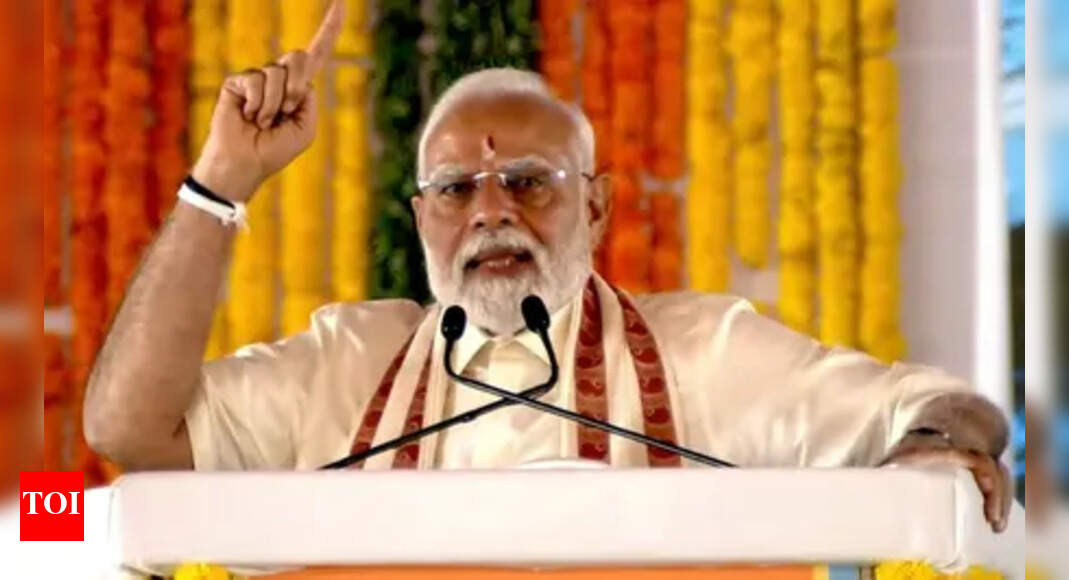
Prime Minister Narendra Modi's recent address in Rameswaram showcased a strong emphasis on promoting Tamil language and heritage on a global scale while simultaneously urging the Tamil Nadu government to facilitate medical education in the Tamil medium. The Prime Minister's remarks, delivered during the inauguration and foundation stone laying ceremony for projects worth over Rs 8,300 crore, underscored the importance of Tamil in the nation's cultural fabric and its potential to benefit the underprivileged. This focus on regional languages and their integration into mainstream education and governance is a significant aspect of the current government's approach to cultural and educational policy. The Prime Minister directly addressed Tamil Nadu's political leaders, gently urging them to sign their names in Tamil, reflecting a deeper respect and recognition of the language's importance. The Prime Minister's emphasis on Tamil can be seen as a strategic move to engage with the state's population and to foster a sense of inclusion and pride in their cultural identity. By advocating for medical education in Tamil, he aims to make healthcare education more accessible to students from disadvantaged backgrounds, promoting equity and social justice in the educational system. This initiative could potentially address the shortage of medical professionals in rural areas, as students who are educated in their native language are more likely to serve in their communities. Furthermore, the Prime Minister highlighted the inauguration of the new Pamban bridge, describing it as the country's first vertical lift railway sea bridge. This infrastructure project is expected to improve connectivity and boost economic activity in the region. Modi's address also touched upon the principles of good governance embodied by Lord Ram, emphasizing that these principles form the foundation for nation-building. His remarks implicitly connect the government's policies and initiatives with the values of ethical leadership and social responsibility. It is important to analyze the broader context and implications of Modi's statements and initiatives. While the promotion of regional languages and cultural heritage is laudable, it is also crucial to ensure that such efforts do not come at the expense of national unity or the development of other languages and cultures. The government needs to strike a balance between promoting regional diversity and fostering a sense of shared national identity. The push for medical education in Tamil also raises questions about the quality and standardization of medical education. It is essential to ensure that medical education in Tamil is of the same standard as medical education in English and that students who are educated in Tamil are able to compete effectively in the national and international medical job markets. The Prime Minister's remarks regarding alleged complaints about funding allocations to Tamil Nadu require further scrutiny. It is important to examine the factual basis of these claims and to address any concerns about the equitable distribution of resources across different states. Ultimately, the success of the Prime Minister's initiatives will depend on the government's ability to translate these pronouncements into concrete actions and to address the underlying challenges and concerns related to language policy, education, and resource allocation.
Expanding on the significance of Prime Minister Modi's emphasis on Tamil heritage, it is crucial to understand the historical and cultural context of the language. Tamil is one of the oldest living languages in the world, with a rich literary tradition that spans over two millennia. It has played a significant role in shaping the cultural identity of South India and has also influenced the development of other languages and cultures in the region. Promoting Tamil heritage on a global scale can help to preserve and celebrate this rich cultural legacy. It can also help to raise awareness of the contributions of Tamil scholars, artists, and thinkers to world civilization. The initiative to impart medical education in Tamil aligns with the broader goal of promoting multilingualism and inclusive education. Research has shown that students learn more effectively when they are taught in their native language. By providing medical education in Tamil, the government can make healthcare education more accessible to students from rural areas and disadvantaged communities who may not have a strong command of English. This can help to address the shortage of medical professionals in these areas and improve healthcare outcomes for the population. However, it is important to ensure that students who are educated in Tamil are also proficient in English, as English is the dominant language in the global medical community. This can be achieved by providing language support and training to students throughout their medical education. The inauguration of the new Pamban bridge is a significant infrastructure development that will improve connectivity and boost economic activity in the region. The bridge is expected to facilitate the movement of goods and people between Rameswaram Island and the mainland, which will benefit businesses and residents alike. The bridge is also a symbol of progress and development, and it reflects the government's commitment to investing in infrastructure projects that improve the quality of life for citizens. Prime Minister Modi's reference to Lord Ram's good governance is a reminder of the importance of ethical leadership and social responsibility. Lord Ram is a revered figure in Hindu mythology who is known for his righteousness, compassion, and commitment to justice. By invoking Lord Ram's example, Prime Minister Modi is encouraging government officials to uphold these values and to serve the people with integrity and dedication. It is important to note that the government's policies and initiatives are subject to criticism and scrutiny. Some critics have argued that the government's emphasis on regional languages and cultural heritage is a form of cultural nationalism that could marginalize minority groups. Others have raised concerns about the quality and standardization of medical education in Tamil. It is important for the government to address these concerns and to ensure that its policies are inclusive and equitable.
Further analyzing the potential benefits and challenges of promoting medical education in Tamil, we need to consider the availability of quality resources and infrastructure. Translating medical textbooks and other learning materials into Tamil requires significant investment and expertise. The government must ensure that these resources are accurate, up-to-date, and culturally appropriate. It is also important to train medical educators who are proficient in Tamil and who can effectively teach medical concepts in the language. Furthermore, the government needs to invest in the development of medical infrastructure in Tamil-speaking areas. This includes building new medical colleges and hospitals, upgrading existing facilities, and providing access to modern medical equipment and technology. The lack of adequate resources and infrastructure could undermine the quality of medical education in Tamil and could limit the career prospects of students who are educated in the language. In addition to addressing the challenges related to resources and infrastructure, the government also needs to address the challenges related to standardization and accreditation. It is important to establish clear standards for medical education in Tamil and to ensure that medical colleges that offer programs in Tamil are accredited by recognized bodies. This will help to ensure that the quality of medical education in Tamil is comparable to the quality of medical education in English. It will also help to ensure that students who are educated in Tamil are able to meet the requirements for medical licensure and certification. The Prime Minister's remarks regarding complaints about funding allocations to Tamil Nadu require a more nuanced analysis. It is important to examine the specific concerns that have been raised and to determine whether there is any factual basis to these claims. The government should be transparent about its funding allocations to Tamil Nadu and should provide clear explanations for any discrepancies or changes in funding levels. It is also important to address any concerns about the equitable distribution of resources across different states. The perception of unfair treatment can undermine trust in the government and can fuel regional tensions. Ultimately, the success of the Prime Minister's initiatives will depend on the government's ability to engage in open dialogue with stakeholders, to address their concerns, and to build consensus around its policies. The government should also be willing to adapt its policies based on feedback and evidence. A flexible and responsive approach will be essential for ensuring that the government's initiatives are effective and sustainable.