
 |
|
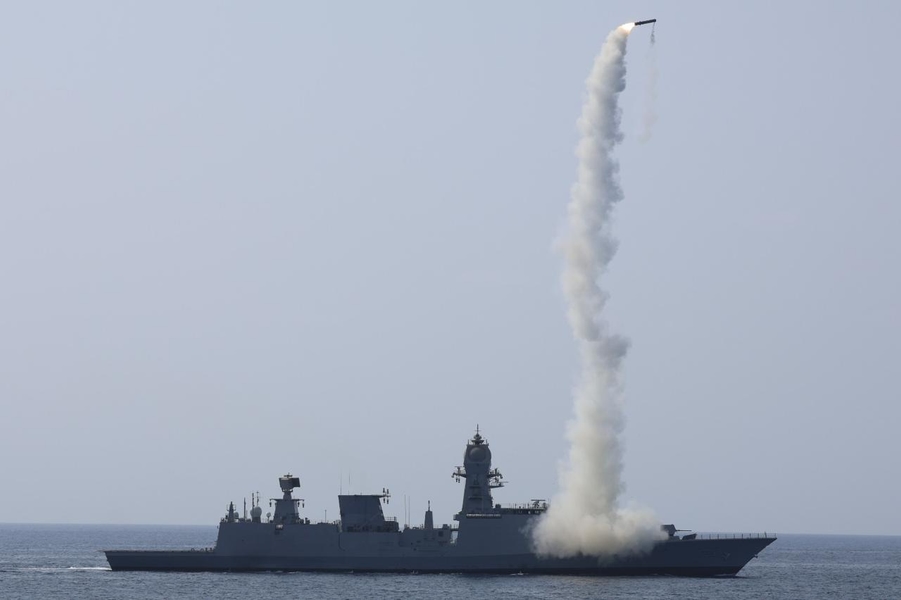
The article paints a picture of heightened tensions between India and Pakistan, characterized by increased military activity and assertive posturing from the Indian side. India is demonstrably showcasing its military capabilities across land, sea, and air, sending a clear message of readiness and resolve to Pakistan. This display of force serves multiple purposes, including deterring further provocations, reassuring the Indian populace, and signaling to the international community India's commitment to defending its interests. The Army's robust response to ceasefire violations along the Line of Control (LoC) is a direct reaction to perceived Pakistani aggression. The retaliatory fire, coupled with the explicit warning of escalating to higher-caliber weapons if necessary, underscores India's willingness to meet force with force. This aggressive stance aims to deter Pakistan from initiating or escalating conflicts along the border. The Navy's successful execution of multiple anti-ship missile launches in the Arabian Sea further amplifies India's military prowess. These exercises not only validate the readiness of the Navy's platforms, systems, and personnel but also demonstrate the country's ability to project power far beyond its territorial waters. The increased strike range of the BrahMos missiles, now capable of reaching 450 km, significantly enhances India's offensive capabilities and provides a potent deterrent against potential adversaries in the maritime domain. The Indian Air Force's (IAF) activation of its western front bases, with fighter jets conducting regular Combat Air Patrols (CAPs), completes the trifecta of military readiness. This heightened state of alert allows the IAF to quickly respond to any aerial threats and maintain air superiority over the region. The deployment of air defense missile systems further strengthens India's ability to protect its airspace and critical infrastructure from potential attacks. The article suggests that this intensified pressure is a deliberate tactic aimed at keeping Pakistan in a state of unease, creating an environment where India can act decisively if necessary. The emphasis on considering the necessary escalation framework and ensuring that nuclear boundaries are not breached highlights the delicate balance and potential risks involved in this strategy. The BrahMos missile, a key component of India's conventional strike capability, is prominently featured in the article. Its supersonic speed and precision-strike capabilities make it a formidable weapon system, capable of inflicting significant damage on enemy targets. The deployment of BrahMos missiles across the Army and Air Force further underscores India's commitment to maintaining a strong and versatile deterrent force. The article also highlights the political dimension of the situation, with references to statements made by Prime Minister Narendra Modi and Defence Minister Rajnath Singh. These statements emphasize India's determination to retaliate against those responsible for terrorist attacks, sending a strong message of accountability and retribution. The Army's response to unprovoked firing by Pakistani forces along the LoC demonstrates India's commitment to defending its territory and protecting its citizens. The retaliatory fire, coupled with the warning of escalating to higher-caliber weapons, underscores India's willingness to meet force with force. The article also mentions the dynamic response strategy that was in place before the fresh understanding between the Indian and Pakistan DGMOs in February 2021 to maintain peace, suggesting a return to a more assertive posture in the face of perceived Pakistani transgressions. The overall tone of the article is assertive and confident, projecting an image of India as a strong and capable military power willing to defend its interests. However, it also acknowledges the risks and potential consequences of escalation, emphasizing the need for careful consideration and adherence to established protocols. The article implies that India is prepared to respond decisively to any further provocations from Pakistan, but it also suggests a preference for a measured and calculated approach that avoids unnecessary escalation and protects the stability of the region.
The strategic implications of India's demonstrated military readiness are far-reaching, extending beyond the immediate context of the India-Pakistan relationship. India's actions serve as a signal to other regional actors, demonstrating its commitment to maintaining stability and protecting its interests in the face of potential threats. The modernization and expansion of India's military capabilities, particularly its naval power, are increasingly viewed as a counterbalance to China's growing influence in the Indian Ocean region. The BrahMos missile, with its extended range and supersonic speed, is a key component of India's maritime strategy, allowing it to project power and deter potential adversaries in the region. The IAF's enhanced operational readiness and air defense capabilities further strengthen India's ability to protect its airspace and critical infrastructure, ensuring its security in a volatile geopolitical environment. The article underscores the importance of maintaining a credible deterrent force as a means of preventing conflict and promoting stability. India's willingness to respond decisively to provocations, while also adhering to established protocols and avoiding unnecessary escalation, demonstrates a responsible and strategic approach to national security. The political dimension of the situation, as highlighted by the statements of Prime Minister Modi and Defence Minister Singh, emphasizes the importance of political will and leadership in shaping national security policy. The article suggests that India's political leadership is fully committed to defending the country's interests and protecting its citizens, even in the face of significant challenges. The Army's response to ceasefire violations along the LoC, while a localized event, reflects a broader trend of increased military activity and heightened tensions in the region. The article highlights the importance of maintaining communication and dialogue between India and Pakistan, even in the midst of heightened tensions, as a means of preventing misunderstandings and avoiding unintended escalation. The dynamic response strategy that was in place before the fresh understanding between the Indian and Pakistan DGMOs in February 2021 to maintain peace, suggests a return to a more assertive posture in the face of perceived Pakistani transgressions. This shift in strategy reflects a growing perception in India that Pakistan is not fully committed to maintaining peace and stability along the border. The overall message of the article is one of strength, resolve, and preparedness. India is demonstrating its military capabilities, signaling its willingness to defend its interests, and sending a clear message to potential adversaries that aggression will not be tolerated. However, the article also acknowledges the risks and potential consequences of escalation, emphasizing the need for careful consideration and adherence to established protocols. The strategic implications of India's actions are significant, extending beyond the immediate context of the India-Pakistan relationship and shaping the geopolitical landscape of the region.
Beyond the immediate tactical demonstrations and strategic signaling, the reported actions highlight a deeper shift in India's approach to national security and foreign policy. There is a discernible move towards greater assertiveness and a willingness to project power beyond its immediate borders. This shift is driven by a number of factors, including a growing sense of confidence in India's economic and military capabilities, a perceived increase in regional instability, and a desire to play a more prominent role in shaping the global order. The emphasis on enhancing indigenous defense production and reducing reliance on foreign arms suppliers is a key element of this strategy. The development and deployment of the BrahMos missile, a joint venture with Russia, exemplifies India's efforts to build a robust and self-reliant defense industry. The modernization of the Indian armed forces, including the acquisition of advanced fighter jets, warships, and missile systems, further strengthens India's ability to project power and deter potential adversaries. The article also underscores the importance of cybersecurity and information warfare in the modern security environment. The protection of critical infrastructure, the prevention of cyberattacks, and the development of offensive cyber capabilities are increasingly seen as essential components of national security. The integration of technology and innovation into the defense sector is another key priority for India. The development of artificial intelligence, robotics, and other advanced technologies is expected to transform the nature of warfare and provide India with a competitive edge in the future. The article suggests that India is adopting a more proactive and assertive approach to diplomacy, seeking to build stronger relationships with like-minded countries and to play a more active role in international organizations. This approach is driven by a desire to promote India's interests, to shape the global agenda, and to contribute to a more stable and prosperous world. The emphasis on multilateralism and international cooperation reflects India's commitment to working with other countries to address shared challenges, such as climate change, terrorism, and pandemics. The article also highlights the importance of maintaining strong relations with its neighbors, including Pakistan, despite the ongoing tensions. The promotion of dialogue and cooperation, even in the midst of heightened tensions, is seen as essential for preventing conflict and promoting stability in the region. The overall message of the article is one of optimism and confidence in India's future. India is demonstrating its military capabilities, strengthening its economy, and asserting its role on the global stage. The country is facing significant challenges, but it is also well-positioned to overcome them and to achieve its full potential. The Indian government's commitment to national security, economic development, and social progress is a testament to its vision and leadership. India's future is bright, and the country is poised to play an increasingly important role in shaping the global order.
The readiness exercise against Pakistan, as detailed in the article, is not an isolated event but rather a manifestation of a broader strategic calculus involving regional power dynamics and global security considerations. Understanding the historical context of Indo-Pakistani relations is crucial to interpreting the current situation. Decades of conflict, mistrust, and unresolved territorial disputes have created a deeply entrenched security dilemma. Each nation's military build-up and assertive posturing are often perceived as threatening by the other, leading to a cycle of escalation. India's perspective is shaped by concerns about cross-border terrorism, particularly the activities of Pakistan-based militant groups. India accuses Pakistan of providing safe haven and support to these groups, which have carried out numerous attacks on Indian soil. Pakistan, on the other hand, denies these allegations and accuses India of human rights abuses in Kashmir and of supporting separatist movements within Pakistan. The Kashmir dispute remains a major source of tension between the two countries. Both India and Pakistan claim sovereignty over the entire region, and several wars have been fought over the issue. The ongoing insurgency in Kashmir and the presence of a large Indian military presence in the region contribute to the instability. China's growing influence in the region further complicates the security dynamics. China is a close ally of Pakistan and has invested heavily in infrastructure projects in the country. India views China's presence in the region with suspicion, particularly its growing naval power in the Indian Ocean. The United States' role in the region is also evolving. The US has historically been a major provider of military and economic assistance to Pakistan, but relations have become strained in recent years due to concerns about Pakistan's support for terrorism and its nuclear weapons program. India, on the other hand, has emerged as a strategic partner of the US, particularly in the context of containing China's influence. The global war on terror has also had a significant impact on the security landscape in the region. Both India and Pakistan have been affected by terrorism, and both have been pressured by the international community to cooperate in counterterrorism efforts. However, mistrust and conflicting priorities have hindered effective cooperation. The nuclear dimension adds another layer of complexity to the security dynamics. Both India and Pakistan possess nuclear weapons, and the possibility of nuclear escalation is a constant concern. The two countries have taken steps to reduce the risk of nuclear war, such as establishing hotlines and agreeing on no-first-use policies, but the risk remains significant. The current situation is characterized by a combination of factors, including historical animosity, unresolved territorial disputes, regional power dynamics, global security considerations, and the nuclear dimension. India's military readiness exercise is a reflection of this complex and volatile environment. It is a signal to Pakistan, to other regional actors, and to the international community that India is prepared to defend its interests and to maintain stability in the region. However, it is also a reminder of the risks of escalation and the need for dialogue and cooperation to resolve the underlying issues.